Full fathom five thy father lies;
Of his bones are coral made;
Those are pearls that were his eyes:
The Tempest, William ShakespeareMadame Sosostris, famous clairvoyante,
Had a bad cold, nevertheless
Is known to be the wisest woman in Europe,
With a wicked pack of cards. Here, said she,
Is your card, the drowned Phoenician Sailor,
(Those are pearls that were his eyes. Look!)
The Waste Land, T. S. Eliot
So, I’m reading an old favorite, Last Call by Tim Powers. The book is a secret history of Las Vegas, the Arthurian Fisher King legend, ancient Tarot cards—the book is a strange beast. I have a careful eye on the magic system, as it relates to some writing I’m doing. I am reminded that T. S. Eliot’s famous modernist poem The Waste Land figures largely in the book. I’ve never read it, so off I go. Then I learn that Shakespeare’s The Tempest figures largely in The Waste Land, and I’ve never read that either. So, off I go again.

I’m enjoying The Tempest, and doing some background reading. I learn that one of the inspirations behind The Tempest was a letter from William Strachey documenting his experience being shipwrecked in Bermuda as he sailed for the Jamestown Colony in Virginia.
The letter is extraordinary.
The letter is a tale of storm and shipwreck, written to a Lady back in England, replete with poetic language, courage, and heroism. It is a little hard to track down, and I could not find one in modern English. So I made one (using my AI-powered OCR Workbench, no less!) For your reading pleasure, it is included below. The original (complete with weird Elizabethan spellings and capitals and italics) can be seen in a digital copy at the Library of Congress.1 The inspiration to The Tempest becomes obvious, including even character names like Ferdinand and Gonzalo!
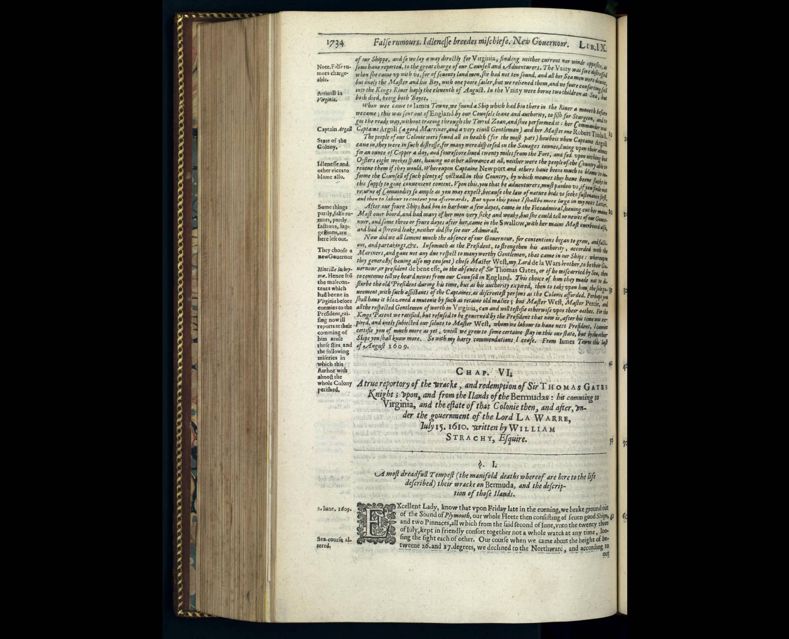
A true repertory of the wracke, and redemption of Sir THOMAS GATES
Knight, upon, and from the Islands of the Bermudas: his coming to
Virginia, and the estate of that Colonie then, and after, under
the government of the Lord L A WARRE,
July 15, 1610. written by WILLIAM
STRACHY, Esquire.
§. I.
A most dreadful Tempest (the manifold deaths whereof are here to the life
described) their wracke on Bermuda, and the
description of those Islands.
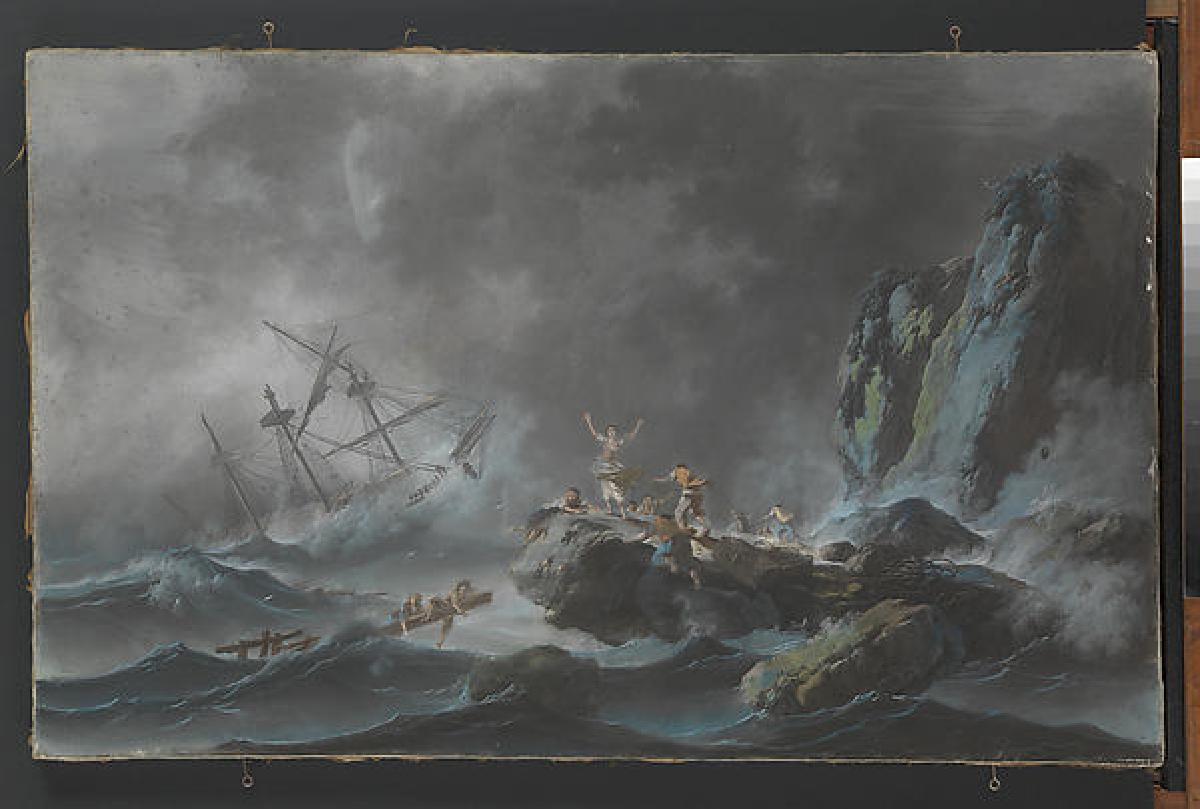
Excellent Lady, know that upon Friday last in the evening, we brake ground out of the Sound of Plymouth, our whole Fleet then consisting of seven Ships, and two Pinnaces, all which from the said second of June, unto the twenty three of July, kept in friendly consort together not a whole watch at any time, losing the sight of each of other. Our course when we came about the height of between 26. and 27. degrees, we declined to the Northward, and according to our Governors instructions altered the trade and ordinary way used heretofore by Dominico, and Menis, in the West-Indies, and found the wind to this course indeed as friendly, as in the judgement of all Sea-men, it is upon a more direct line and by Sir George Summers our Admiral had been likewise in former time sailed, being a Gentleman of approved assuredness, and ready knowledge in Sea-faring actions, having often carried command, and chief charge in many Ships Royal of her Majesties, and in sundry Voyages made many defeats and attempts in the time of the Spaniards quarreling with us, upon the Islands and Indies, &c. We had followed this course so long, as we were within seven or eight days at the most, by Cap. Newport’s reckoning of making Cape Henry, upon the coast of Virginia: When on S. James his day, July 24, being Monday (preparing for no less all the black night before) the clouds gathering thick upon us, and the winds singing, and whistling most unusually, which made us to cast off our Pinnace2 towing the same until then astern, a dreadful storm and hideous began to blow from out the North-east, which swelling, and roaring as it were by fits, some hours with more violence than others, at length did beat all light from heaven; which like an hell of darkness turned black upon us, so much the more full of horror, as in such cases horror and fear use to overturn the troubled, and overmastered senses of all, which (taken up with amazement) the ears lay so sensible to the terrible cries, and murmurs of the winds, and distraction of our Company, as who was most armed, and best prepared, was not a little shaken. For surely (Noble Lady) as death comes not so sudden nor apparent, so he comes not so elvish and painful (to men especially even then in health and perfect habitudes of body) as at Sea; who comes at no time so welcome, but our frailty (so weak is the hold of hope in miserable demonstrations of danger) it makes guilty of many contrary changes, and conflicts: For indeed death is accompanied at no time, nor place with circumstances every way so uncapable of particularities of goodness and inward comforts, as at Sea. For it is most true, there ariseth commonly no such unmerciful tempest, compound of so many contrary and diverse Nations, but that it worketh upon the whole frame of the body, and most loathsomely affecteth all the powers thereof: and the manner of the sickness it lays upon the body, being so vulnerable, gives not the mind any free and quiet time, to use her judgment, and Empire: which made the Poet say:
Hostium uxores, puerique caecos
Sentiant motus orientis Haedi, &
AEquoris nigri fremitum, & trementes
Uerbere ripas.3
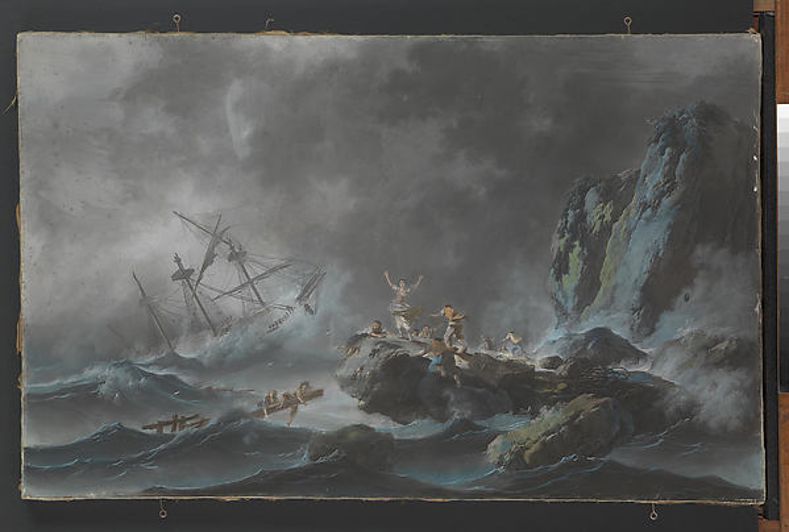
For four and twenty hours the storm in a restless tumult, had blown so exceedingly, as we could not apprehend in our imaginations any possibility of greater violence, yet did we still find it, not only more terrible, but more constant, fury added to fury, and one storm urging a second more outrageous than the former; whether it so wrought upon our fears, or indeed met with new forces: Sometimes strikes in our Ship amongst women, and passengers, not used to such burly and discomforts. make us look one upon the other with troubled hearts, and panting bosoms: our clamors drowned in the winds, and the winds in thunder. Prayers might well be in the heart and lips, but drowned in the outcries of the Officers: nothing heard that might give comfort, nothing seen that might encourage hope. It is impossible for me, had I the voice of Stentor, and expression of as many tongues, as his throat of voices, to express the outcries and miseries, not languishing, but wasting his spirits, and art constant to his own principles, but not prevailing. Our sails wound up lay without their use and if at any time we bore but a Hollocke, or half forecourse, to guide her before the Sea, six and sometimes eight men were not enough to hold the whipstaff in the steerage, and the tiller below in the Gunner room, by which may be imagined the strength of the storm: In which, the Sea swelled above the Clouds, and gave battle unto Heaven. It could not be said to rain, the waters like whole Rivers did flood in the air. And this I did observe, that whereas upon Land, when a storm hath powered itself forth once in drifts of rain, the wind as beaten down, and vanquished therewith, not long after endureth: here the glut of water (as if throatling the wind erewhile) was no sooner a little emptied and qualified, but instantly the winds (as having gotten their mouths now free, and at liberty) spake more loud; and grew more tumultuous, and malignant: What shall I say? Winds and Seas were as mad, as fury and rage could make them; and for mine own part, I had been in some storms before, as well upon the coast of Barbary and Algeere, in the Levant, and once more distressful in the Adriatique gulf, in a bottom of Candy, so I may say. Ego quid sit ater Adriae novi sinus, et quid albus Peccet Iapex. Yet all that I had ever suffered gathered together, might not hold comparison with this: there was not a moment in which the sudden splitting or instant over-setting of the ship was not expected.
Howbeit this was not all, it pleased God to bring a greater affliction yet upon us for in the beginning of the storm we had received likewise a mighty leak. And the Ship in every joint almost, having spewed out her oakum before we were aware (a casualty more desperate than any other that a Voyage by Sea draweth with it) was grown five foot suddenly deep with water above her ballast, and we almost drowned within, whilst we sat looking when to perish from above. This imparting no less terror than danger, ran through the whole Ship with much fright and amazement, startled and turned the blood, and took down the braves of the most hardy Mariner of them all, insomuch as he that before happily felt not the sorrow of others, now began to sorrow for himself, when he saw such a pond of water so suddenly broken in, and which he knew could not (without present avoiding) but instantly sink him. So as joining (only for his own sake, not yet worth the saving) in the public safety; there might be seen Masters, Masters Mate, Boatswain, Quarter Master, Coopers, Carpenters, and who not, with candles in their hands, creeping along the ribs viewing the sides, searching every corner, and listening in every place, if they could hear the water run. Many a weeping leak was this way found, and hastily it stopped, and at length one in the Gunner room made up with I know not how many pieces of Beef: but all was to no purpose, the Leak (if it were but one) which drunk in our greatest Seas, and took in our destruction fastest, could not then be found, nor ever was, by any labor, counsel, or search. The waters still increasing, and the Pumps going, which at length choked with bringing up whole and continual Bisket (and indeed all we had, ten thousand weight) it was conceived, as most likely, that the Leak might be sprung in the Breadroom, whereupon the Carpenter went down, and ripped up all the room, but could not find it so.
I am not able to give unto your Ladyship every man’s thought in this perplexity, to which we were now brought; but to me, this Leakage appeared as a wound given to men that were before dead. The Lord knoweth, I had as little hope, as desire of life in the storm, & in this, it went beyond my will; because beyond my reason, why we should labor to preserve life; yet we did, either because so dear are a few lingering hours of life in all mankind, or that our Christian knowledges taught us, how much we owed to the rites of Nature, as bound, not to be false to our fellows, or to neglect the means of our own preservation; the most despair-full things amongst men, being matters of no wonder nor moment with him, who is the rich Fountain and admirable Essence of all mercy.
Our Governor, upon the Tuesday morning (at what time, by such who had been below in the hold, the Leak was first discovered) had caused the whole Company, about one hundred and forty, besides women, to be equally divided into three parts, and opening the Ship in three places (under the forecastle, in the waste, and hard by the Bitacke4) appointed each man where to attend; and thereunto every man came duly upon his watch, took the Bucket, or Pump for one hour, and rested another. Then men might be seen to labor, I may wellsay, for life, and the better sort, even our Governor, and Admiral themselves, not refusing their turn, and to spell each the other, to give example to others. The common sort stripped naked, as men in Gallys, the easier both to hold out, and to shrink from under the salt water, which continually leapt in among them, kept their eyes waking, and their thoughts and hands working, with tired bodies; and wasted spirits, three days and four nights destitute of outward comfort, and desperate of any deliverance, testifying how mutually willing they were, yet by labor to keep each other from drowning, albeit each one drowned whilst he labored.
Once, so huge a Sea broke upon the poop and quarter, upon us, as it covered our Ship from stern to stem, like a garment or a vast cloud, it filled her brim full for a while within, from the hatches up to the spar deck. This source or confluence of water was so violent, as it rushed and carried the Helm-man from the Helm, and wrested the Whipstaff out of his hand, which so flew from side to side, that when he would have ceased the same again, it so tossed him from Starboard to Larboard, as it was Gods mercy it had not split him; It so beat him from his hold, and so bruised him, as a fresh man hazarding in by chance fell fair with it, and by main strength bearing somewhat up, made good his place, and with much clamor encouraged and called upon others; who gave her now up, rent in pieces and absolutely lost. Our Governor was at this time below at the Capstone, both by his speech and authority heartening every man unto his labor. It struck him from the place where he sat, and groveled him, and all us about him on our faces, beating together with our breaths all thoughts from our bosoms, else, then that we were now sinking. For my part, I thought her already in the bottom of the Sea; and I have heard him say, wading out of the flood thereof, all his ambition was but to climb up above hatches to die in Aperto caelo (“open sky”), and in the company of his old friends. It so stunned the ship in her full pace, that she stirred no more, then if she had been caught in a net, or then, as if the fabulous Remora had stuck to her fore-castle. Yet, without bearing one inch of sail, even then she was making her way nine or ten leagues in a watch. One thing, it is not without his wonder (whether it were the fear of death in so great a storm, or that it pleased God to be gracious unto us) there was not a passenger, gentleman, or other, after he began to stir and labor, but was able to relieve his fellow, and make good his course : And it is most true, such as in all their life times had never done hours work before (their minds now helping their bodies) were able twice forty-eight hours together to toil with the best.
During all this time, the heavens looked so black upon us, that it was not possible the elevation of the Pole might be observed, nor a star by night, not Sun by day was to be seen. Only upon the Thursday night, Sir George Summers being upon the watch, had an apparition of a little round light, like a faint Star, trembling, and streaming along with a sparkling blaze, half the height upon the Main Mast, and shooting sometimes from Shroud to Shroud, tempting to settle as it were upon any of the four Shrouds, and for three or four hours together, or rather more, half the night it kept with us, running sometimes along the Main-yard to the very end, and then returning. At which Sir George Summers called diverse about him, and showed them the same, who observed it with much wonder and carefulness: but upon a sudden, towards the morning watch, they lost the sight of it, and knew not what way it made. The superstitious Sea-men make many constructions of this Sea-fire, which nevertheless is usual in storms. The same (it may be) which the Graecians were wont in the Mediterranean to call Castor and Pollux, of which, if one only appeared without the other, they took it for an evil sign of great tempest. The Italians and such, who lie open to the Adriatic and Tyrene Sea call it (a sacred Body), Corpo sacto. The Spaniards call it Saint Elmo and have an authentic and miraculous Legend for it. Be it what it will, we laid other foundations of safety or ruin, than in the rising and falling of it, could have served us now miraculously to have taken our height by, it might have strucken amazement, and a reverence in our devotions, according to the due of a miracle. But it did not light us any whit the more to our known way, who ran now, (as do hoodwinked men) at all adventures, sometimes North and North-east, then North and by West, and in an instant again varying two or three points, and sometimes half the Compass. East and by South we steered away as much as we could to bear upright, which was no small carefulness nor pain to do, albeit we much unrigged our Ship, threw overboard much luggage, many a Trunk and Chest (in which I suffered no mean loss) and staved many a Butt of Beer, Hogheads of Oil, Cider, Wine, and Vinegar, and heaved away all our Ordnance on the Starboard side, and had now purposed to have cut down the Main Mast, the more to lighten her, for we were much spent, and our men so weary as their strengths together failed them, with their hearts, having travailed now from Tuesday till Friday morning, day and night, without either sleep or food; for the leakage taking up all the hold, we could neither come by Beer nor fresh water; fire we could keep none in the Cook-room to dress any meat, and carefulness, grief, in our turn at the Pump or Bucket, were sufficient to hold sleep from our eyes.
And surely, madam, it is most true, there was not any hour (a matter of admiration) all these days in which we freed not twelve hundred Barricos of water, the least whereof contained six gallons and some eight, besides three deep Pumps continually going, two beneath at the Capstone, and the other above in the half Deck, and at each Pump, four thousand strokes at the least in a watch, so as I may well say, every four hours, we quit one hundred tons of water: and from tuesday noon till friday noon, we bailed and pumped two thousand ton, and yet do what we could, when our Ship held least in her, after tuesday night second watch, she bore ten feet deep, at which stay our extreme working kept her one eight glasses5, forbearance whereof had instantly sunk us, and it being now Friday, the fourth morning, it wanted little, but that there had been a general determination, to have shut up hatches, and commended our sinful souls to God, committed the Ship to the mercy of the Sea: surely that night we must have done it, and that night had we then perished: but see the goodness and sweet introduction of better hope, by our merciful God given unto us. Sir George Summers, when no man dreamed of such happiness, had discovered, and cried Land. Indeed, the morning now three-quarters spent, had a little clearness from the days before, and it being better surveyed, the very trees were seen to move with the wind upon the shore side: whereupon our Governor commanded the Helm-man to bear up, the Boatswain sounding at the first, found it thirteen fathom, & when we stood a little in seven fathom; and presently heaving his lead the third time, had ground at four fathom, and by this, we had got her within a mile under the South-East point of the land, where we had somewhat smooth water. But having no hope to save her by coming to an anchor in the same, we were enforced to run her ashore, as near the land as we could, which brought us within three-quarters of a mile of shore, and by the mercy of God, unto us, making out our Boats, we had ere night brought all our men, women, and children, about the number of one hundred and fifty, safe into the Island.
We found it to be the dangerous and dreaded Island, or rather islands of the Bermuda: whereof let me give your Ladyship a brief description, before I proceed to my narration. And that the rather, because they be so terrible to all that ever touched on them, and such tempests and thunders, and other fearful objects are seen and heard about them, that they be called commonly, The Devils Islands, and are feared and avoided by all sea travelers alive, above any other place in the world. Yet it pleased our merciful God, to make even this hideous and hated place, both the place of our safety, and means of our deliverance.
And hereby also, I hope to deliver the world from a foul and general error: it being counted of most, that they can be no habitation for Men, but rather given over to Devils and wicked Spirits; whereas indeed we find them now by experience to be as habitable and commodious as most Countries of the same climate and situation, insomuch as if the entrance into them were as easy as the place itself is contenting, it had long ere this been inhabited, as well as other islands. Thus shall we make it appear, that Truth is the Daughter of Time, and that men ought not to deny every thing which is not subject to their own sense.
The letter continues onward as they spend a year on Bermuda before making it to Virginia, but translating all this is hard work and I’m feeling lazy. :)
Purchas, Samuel, 1577?-1626, et al. Haklvytvs posthumus, or, Pvrchas his Pilgrimes: contayning a history of the world, in sea voyages, & lande-trauells. [London: Imprinted at London for Henry Fetherston at yee signe of the rose in Pauls Churchyard, 1625] Pdf. Retrieved from the Library of Congress, <www.loc.gov/item/06002669/>. ↩︎
A Pinnace is a small utility boat, usually towed behind a sailing ship. ↩︎
Horace:
The wives of the enemy, and the blind children
Let the children feel the movement of the east, &
The roar of the black sea, and the trembling
Stirring banks. ↩︎Meaning unclear, likely either the binnacle, a small housing near the Helmsman where the compass was kept, or the bitts, heavy wooden posts near the mainmast used to secure the anchor cables. ↩︎
Eight glasses = four hours = one full watch. So: “When our ship was least filled, with ten feet of water in the hold, as hard as we worked, we were only able to keep the water from rising for four hours, or one full watch.” ↩︎