books I’m reading

Mark Watkins
Author
Mark Watkins
Entrepreneur & author

Here are some books I am reading now, or have recently read. These lists are powered by Bookship, my social reading app. I also use my TBR app to manage my, well, TBR.
The Odyssey
reading

Homer

Finally—an Odyssey that’s both beautiful and easy to understand.Let’s be honest: many translations of The Odyssey feel distant, confusing, or just plain exhausting. This Collector’s Edition changes that—combining modern readability with stunning original illustrations in a format designed to be read, studied, and treasured.A Translation That Flows: Faithful to Homer, yet clear and vivid—no archaic jargon, no frustration. Just a timeless story, brilliantly told.Notes & Glossary That Actually Help: Instantly understand who’s who, what’s happening, and why it matters—with cultural insights and a full glossary of gods, heroes, and places.Original Illustrations Throughout: Iconic scenes—Odysseus vs. Polyphemus, the Sirens’ call—brought to life with artwork created exclusively for this edition.Collector’s Format (8.5"×11"): Generously sized to showcase every illustration and make reading a pleasure—perfect for display, study, or gifting.Ideal for: Students seeking clarity • Teachers building classroom libraries • Classics lovers who value quality • Anyone wanting a gift that lasts a lifetime.Experience Homer’s masterpiece the way it deserves to be read. Order your copy today.
No Man's Land
reading

Richard K. Morgan

A compelling standalone dark fantasy set in a gritty post-WWI Britain that has been overrun by the fae, from the award-winning author of Altered Carbon“One of my favorite books of the year, destined to be a classic.”—Tim Lebbon, New York Times bestselling author of Secret Lives of The DeadThe Great War was supposed to be the war to end all wars—and maybe it would have been, had an even greater, otherworldly foe not risen to extinguish the conflict. Overnight, as guns blazed in France and Flanders, village after village in the quiet British countryside was swallowed by the Forest. And within the Forest lurk the Huldu—an ancient fae race, monstrous in their inhumanity, who have decided that mankind’s ascendency over the world can endure no longer.Enter Duncan Silver. Scarred by the war, fueled by a rage deeper than the trenches in which he once fought, Duncan is determined to show the Huldu that the world is not theirs for the taking. Armed with a deadly iron knife and a cut-down trench gun filled with iron shot, Duncan will stop at nothing to return the children the Huldu have stolen to the arms of their families. No matter how many Huldu he may have to slaughter along the way.But when he is hired by a mother to return her four-year-old daughter, Miriam—taken by the Huldu six months past and replaced with a changeling—all hell breaks loose. Miriam is a pawn in a much bigger game for dominance than Duncan ever expected, and several long-buried secrets from his past are about to be violently resurrected.
Moby Dick
reading

Herman Melville

Moby-Dick; or, The Whale is a novel by Herman Melville, in which Ishmael narrates the monomaniacal quest of Ahab, captain of the whaler Pequod, for revenge on the albino sperm whale Moby Dick, which on a previous voyage destroyed Ahab’s ship and severed his leg at the knee. Although the novel was a commercial failure and out of print at the time of the author’s death in 1891, its reputation grew immensely during the twentieth century. D. H. Lawrence called it “one of the strangest and most wonderful books in the world,” and “the greatest book of the sea ever written.” Moby-Dick is considered a Great American Novel and an outstanding work of the Romantic period in America and the American Renaissance. “Call me Ishmael” is one of world literature’s most famous opening sentences. The product of a year and a half of writing, the book is dedicated to Nathaniel Hawthorne, “in token of my admiration for his genius,” and draws on Melville’s experience at sea, on his reading in whaling literature, and on literary inspirations such as Shakespeare and the Bible. The detailed and realistic descriptions of whale hunting and of extracting whale oil, as well as life aboard ship among a culturally diverse crew, are mixed with exploration of class and social status, good and evil, and the existence of God. In addition to narrative prose, Melville uses styles and literary devices ranging from songs, poetry and catalogs to Shakespearean stage directions, soliloquies and asides. The author changed the title at the very last moment in September 1851. The work first appeared as The Whale in London in October 1851, and then under its definitive title Moby-Dick in New York in November. The whale, however, appears in both the London and New York editions as “Moby Dick,” with no hyphen. The British edition of five hundred copies was not reprinted during the author’s life, the American of almost three thousand was reprinted three times at approximately 250 copies, the last reprinting in 1871. These figures are exaggerated because three hundred copies were destroyed in a fire at Harper’s; only 3,200 copies were actually sold during the author’s life.
Two Years Before the Mast
reading

Richard Henry Dana

Two Years Before the Mast is a memoir by the American author Richard Henry Dana Jr., published in 1840, having been written after a two-year sea voyage from Boston to California on a merchant ship starting in 1834.In the book, which takes place between 1834 and 1836, Dana gives a vivid account of “the life of a common sailor at sea as it really is”. He sails from Boston to South America and around Cape Horn to California. Dana’s ship was on a voyage to trade goods from the United States for the Mexican colonial Californian California missions’ and ranchos’ cow hides. They traded at the ports in San Diego Bay, San Pedro Bay, Santa Barbara Channel, Monterey Bay, and San Francisco Bay.A film adaptation under the same name was released in 1946.Richard Henry Dana, Jr. (1815-1882) was an American lawyer and politician who gained renown as the author of the American classic Two Years Before the Mast, a memoir of his time spent at sea as a merchant seaman.
The Medieval Cookbook: Revised Edition
reading

Maggie Black

This book takes the reader on a gastronomic journey through the Middle Ages, offering not only a collection of medieval recipes, but a social history of the time. The eighty recipes, drawn from the earliest English cookbooks of the fourteenth and fifteenth centuries, are presented in two formats: the original middle English version and one adapted and tested for the modern cook.  In a fascinating introduction, the author describes the range of available ingredients in medieval times and the meals that could be prepared from them—from simple daily snacks to celebratory feasts—as well as the preparation of the table, prescribed dining etiquette, and the various entertainments that accompanied elite banquets. Each chapter presents a series of recipes inspired by a historical event, a piece of literature, or a social occasion. Here we find descriptions of the grilled meats consumed by William the Conqueror’s invading forces; the pies and puddings enjoyed by the pilgrims in Chaucer’s The Canterbury Tales; and the more sumptuous fare served at royal feasts and Christmas celebrations.  The author ends with a discussion of herbal recipes for various ailments. Beautifully illustrated with lively dining scenes from illuminated manuscripts and tapestries, this book serves up a delightful literary and visual repast for anyone interested in the history of food and dining.

Walking the Plank
read

Stephen Kiesling

Walking the Plank is the updated true adventure of a journalist learning to swim in our sea of fake news. It’s about a year with treasure hunter Barry Clifford and his many discoveries of the 1717 pirate ship Whydah—a wreck that wasn’t actually missing. it’s also about a “Media Plan”—written by the president of Random House and two Wall Street moguls—that put Clifford on the cover of Parade as “The Man Who Found a $400 Million Pirate Treasure!” and set up front-page stories in the New York Times heralding a treasure worth hundreds of millions. Ultimately, the Media Plan led to a CBS News Special in which Walter Cronkite, the most trusted man in America, announced “tons of gold” as well as a $6 million stock offering to excavate the motherlode. A book about Clifford and the Whydah was also part of the Media Plan. Author Stephen Kiesling wasn’t willing to lie. A journalist trained by a World War II artillery scout, Kiesling ultimately found the real secret of the Whydah treasure hidden in the pirate’s stove: an iron rotisserie discovered by Clifford in 1984, 1985, 1988, 2007, and finally displayed in a museum in 2016. The stove—found in the middle of the “motherlode”— was already famous because Henry David Thoreau wrote about it sticking out of the waves. The LA Times calls Walking the Plank “hilarious…why they don’t call it ‘fool’s gold’ for nothing.” The Boston Globe says it’s “a scathing critique of how Barry Clifford financed and documented the underwater excavation of the pirate ship Whydah off Cape Cod.” Archaeology magazine says Walking the Plank is “highly recommended,” and Antiquities says it’s “required reading.” Stephen Kiesling has written for the New Yorker, Sports Illustrated, and Outside and is the author of The Shell Game: Reflections on Rowing and the Pursuit of Excellence. The New York Times Book Review calls Kiesling “true blue.” He is editor in chief of the FOLIO award-winning magazine Spirituality & Health.
From Ritual to Romance
read

Jessie L. Weston

Jessie L. Weston’s book “From Ritual to Romance” delves into the Grail legend, exploring the various versions of the story and the tasks imposed on the heroes. The book aims to determine the true nature of the Grail by analyzing the tasks undertaken by Gawain, Perceval, and Galahad. Weston discusses the evolution of the Grail story, from the Gawain form with a focus on the Waste Land to the Perceval versions emphasizing the King’s illness. The book also examines the significance of the hero’s question in different versions and the consequences of their success or failure. Weston’s analysis sheds light on the underlying themes of the Grail legend and its connection to ancient rituals and beliefs.
The First Strange Place: Race and Sex in World War II Hawaii
read

Beth L. Bailey

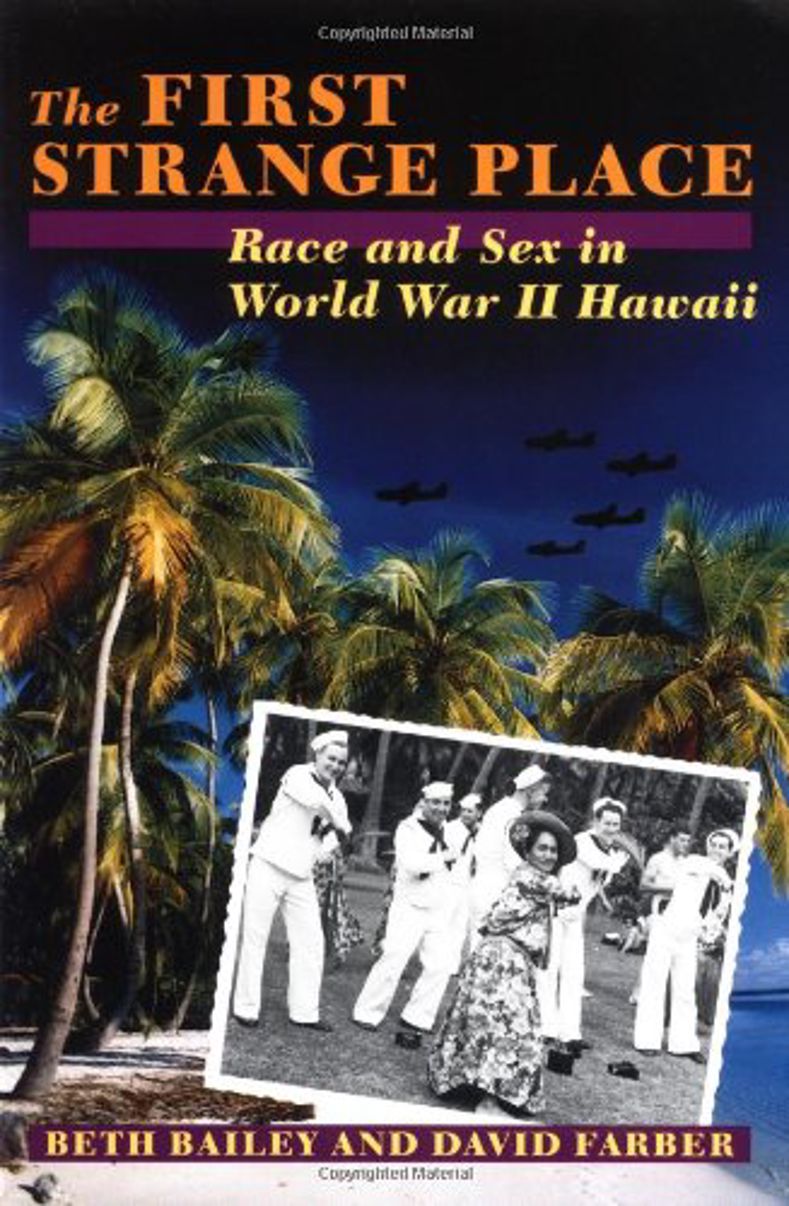
As the forward base and staging area for all US military operations in the Pacific during World War II, Hawaii was the “first strange place” for close to a million soldiers, sailors, and marines on their way to the horrors of war. But Hawaii was also the first strange place on another kind of journey, toward the new American society that would begin to emerge in the postwar era. Unlike the rigid and static social order of prewar America, this was to be a highly mobile and volatile society of mixed racial and cultural influences, one above all in which women and minorities would increasingly demand and receive equal status. Drawing on documents, diaries, memoirs, and interviews, Beth Bailey and David Farber show how these unprecedented changes were tested and explored in the highly charged environment of wartime Hawaii.
Company of Liars
read

Karen Maitland

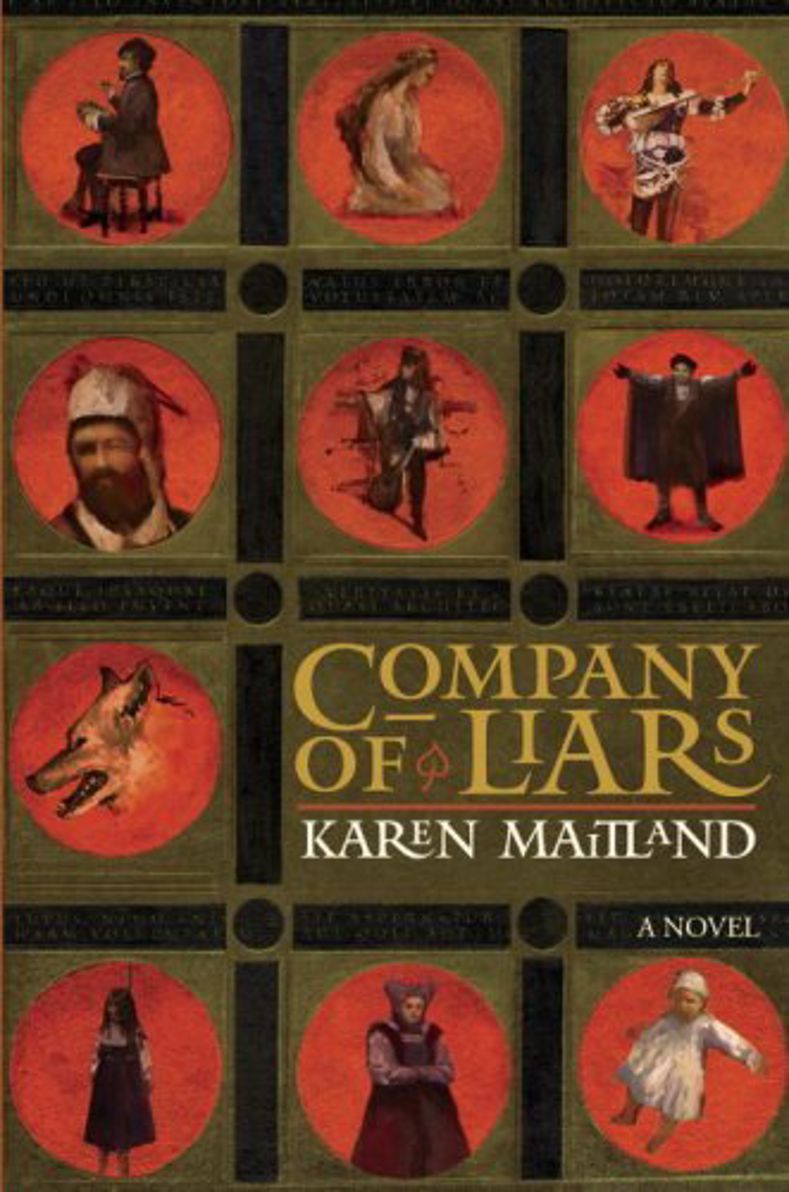
The year is 1348 and the first plague victim has reached English shores. Panic erupts around the country and a small band of travellers comes together to outrun the deadly disease, unaware that something far more deadly is - in fact - travelling with them. The ill-assorted company - a scarred trader in holy relics, a conjurer, two musicians, a healer and a deformed storyteller - are all concealing secrets and lies. And at their heart is the strange, cold child - Narigorm - who reads the runes. But as law and order breaks down across the country and the battle for survival becomes ever more fierce, Narigorm mercilessly compels each of her fellow travellers to reveal the truth, and each in turn is driven to a cruel and unnatural death.
The Grammar of Fantasy: An Introduction to the Art of Inventing Stories
read

Gianni Rodari

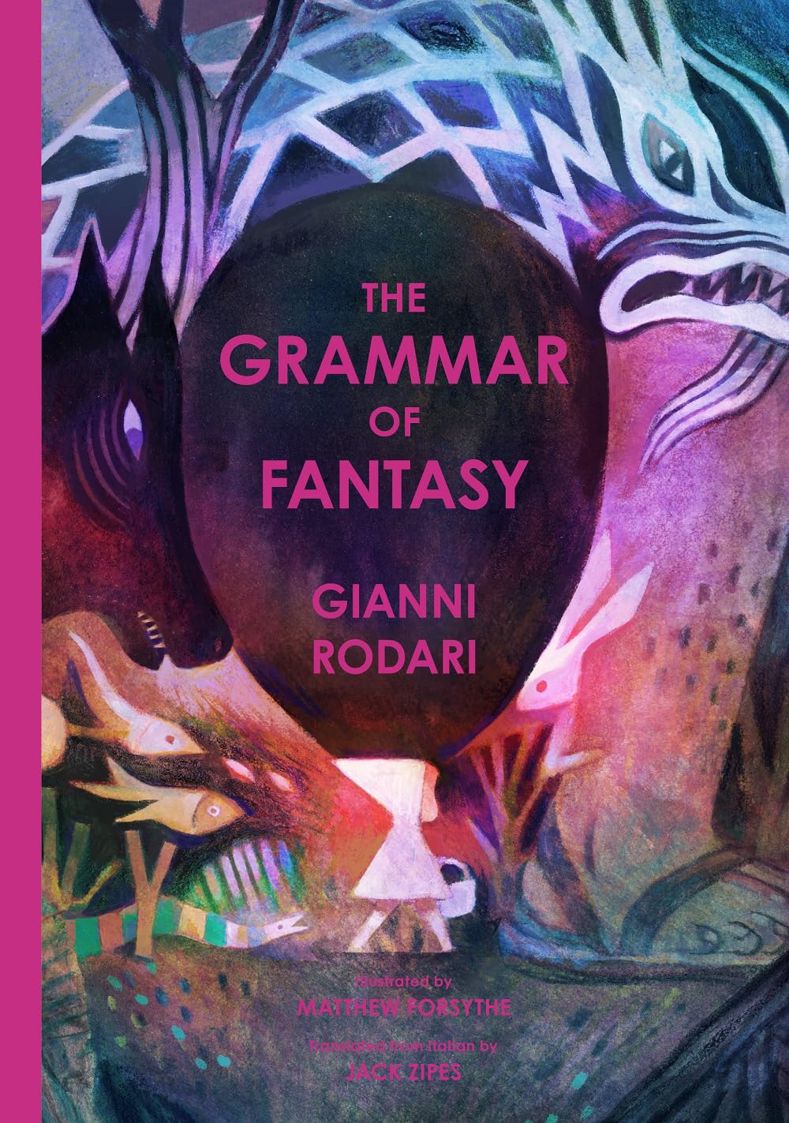
From the father of modern Italian children’s literature, this is one of the great works about the imagination and how stories are made—featuring radiant illustrations from Matthew Forsythe and a refreshed translation from Jack Zipes.

“Holds great value for the adults who teach kids and the adults who write for them.” —Mac Barnett, U.S. National Ambassador for Young People’s Literature, for the New York Times

★ “A must-have for educators and librarians looking to inject creativity into their classrooms.” —School Library Journal, STARRED REVIEW!

This handbook for writers of all ages and kinds is essential reading for teachers and creatives. It offers a playful, practical path to finding your own voice through the power of storytelling. Full of ideas, glosses on fairy tales, stories, and wide-ranging activities, this book changed how creative arts were taught in Italian schools.

Gianni Rodari is not only revered as a children’s author, but also remembered for his visionary pedagogy, and it is these two fields he combines in this revolutionary essay collection. Translated into English by acclaimed scholar of folklore and children’s literature Jack Zipes, and with original art from illustrator Matthew Forsythe, this edition of The Grammar of Fantasy is one to live with and return to for its humor, intelligence, and remarkable understanding of children.
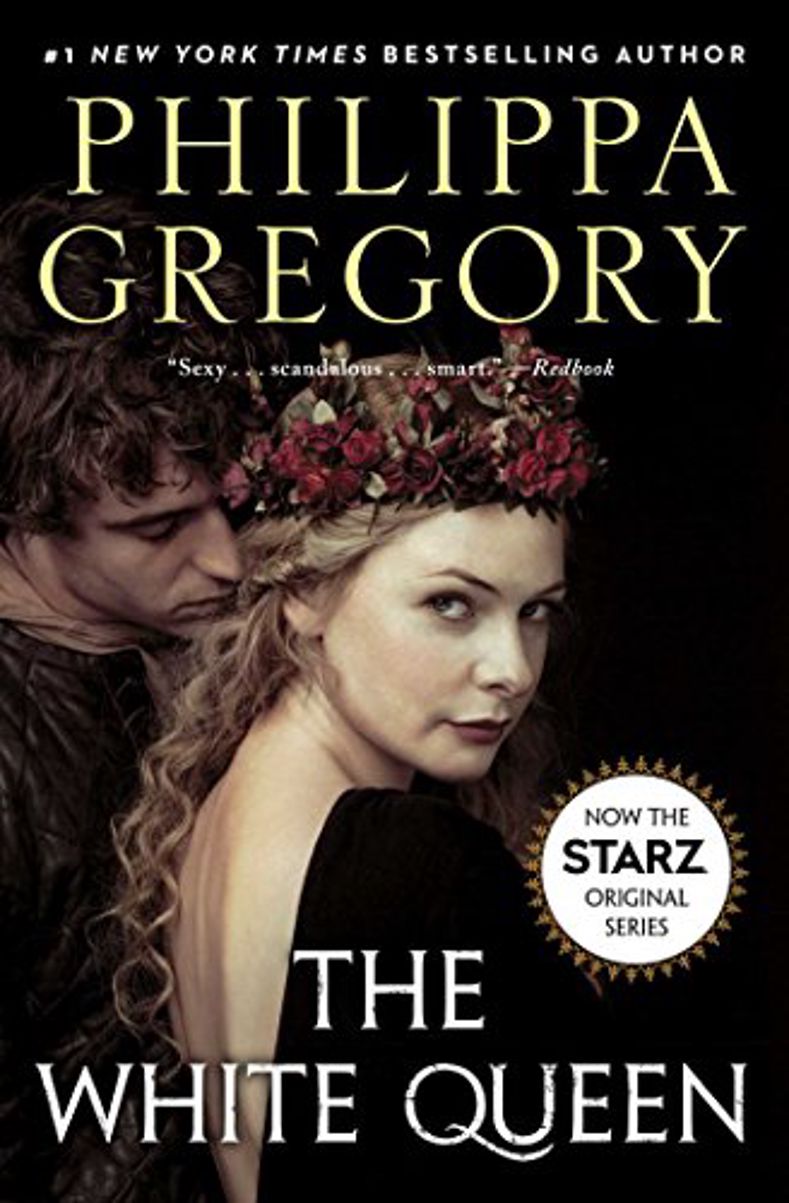
The White Queen
read

Philippa Gregory

THE COMPELLING NOVEL FROM SUNDAY TIMES BESTSELLER PHILIPPA GREGORY

The tale of one woman’s ambitious ascent to royalty during the Wars of the Roses and the unsolved mystery around her sons’ imprisonment in the Tower

The first in a stunning series, The Cousins’ War, is set amid the tumult and intrigue of The War of the Roses. Internationally bestselling author Philippa Gregory brings this family drama to colourful life through its women, beginning with the story of Elizabeth Woodville, the White Queen.

The White Queen tells the story of a common woman who ascends to royalty by virtue of her beauty, a woman who rises to the demands of her position and fights tenaciously for the success of her family, a woman whose two sons become the central figures in a mystery that has confounded historians for centuries: the Princes in the Tower whose fate remains unknown to this day. From her uniquely qualified perspective, Philippa Gregory explores the most famous unsolved mystery, informed by impeccable research and framed by her inimitable storytelling skills.

Praise for Philippa Gregory:

‘Meticulously researched and deeply entertaining, this story of betrayal and divided loyalties is Gregory on top form’ Good Housekeeping

‘Gregory has popularised Tudor history perhaps more than any other living fiction writer…all of her books feature strong, complex women, doing their best to improve their lives in worlds dominated by men’ Sunday Times

‘Engrossing’ Sunday Express

‘Popular historical fiction at its finest, immaculately researched and superbly told’ The Times

‘Queen of the historical novel’ Mail on Sunday
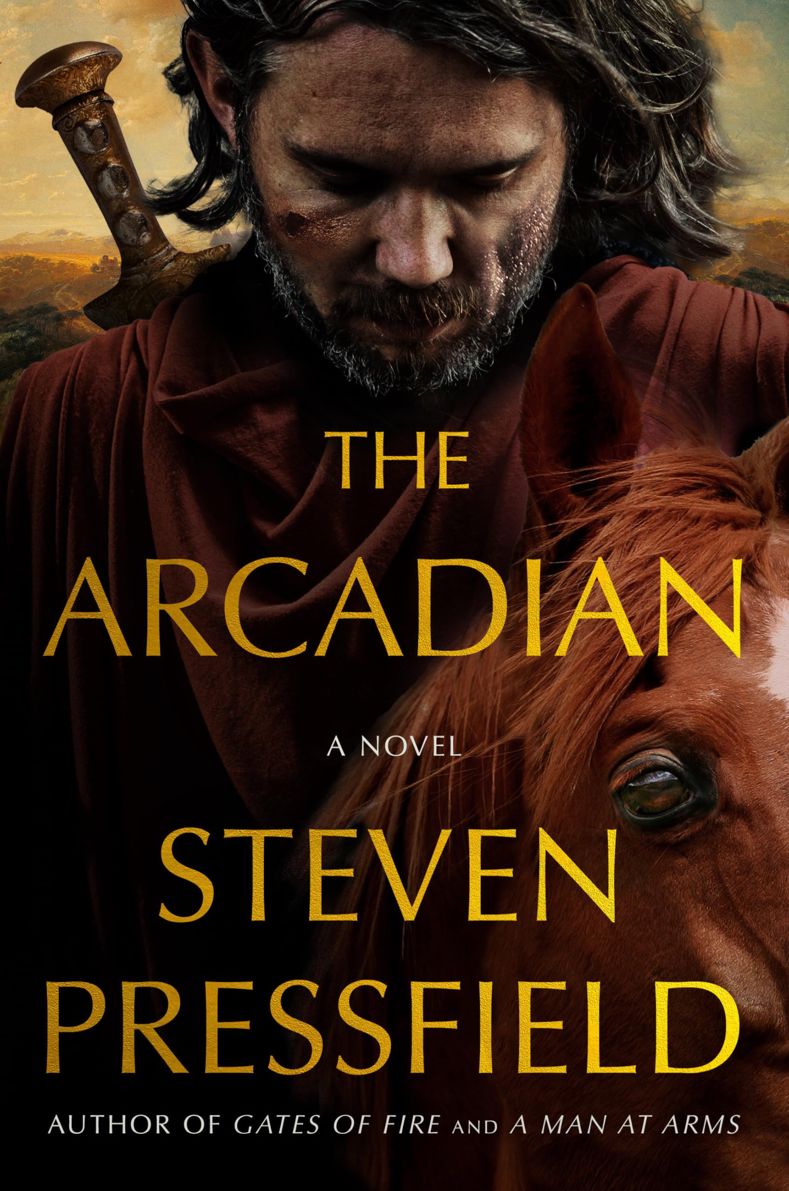
The Arcadian: A Novel
read

Steven Pressfield

The best-selling author of Gates of Fire and A Man at Arms presents a gripping, genre-bending story of a mercenary in late medieval Spain and the eternal costs of violence.

Spain, the 1500s. The Iberian Peninsula is splintered by faith and ambition, its kingdoms locked in endless struggle. Armies clash, religions collide, and empires rise on tides of blood. Into this crucible rides Telamon: soldier, mercenary, outcast. He has lived a hundred lives across centuries, forever condemned to take up arms. Now, drawn into the brutal conflict between Portuguese invaders and Andalusian defenders, he must face both the battlefield before him and the eternal war within himself.

But Telamon is not alone. Across time, through lifetimes, the same figures return: comrades and rivals, lovers and betrayers, all reborn in new forms, bound together by a cycle neither mercy nor death can break. As the armies close on a desperate city, their destinies entwine once more, and Telamon is forced to reckon with the questions that haunt every warrior’s soul: Can a man made for battle ever put down his sword? And is there redemption for one who has spilled blood?

With The Arcadian, bestselling author and master of historical fiction Steven Pressfield delivers a sweeping standalone novel that fuses the grit of historical realism with the mysticism of the ancient world. A meditation on fate, justice, and release from violence, The Arcadian is both a war story and a timeless journey of the spirit―a novel that asks not just how men fight, but why.

Hammajang Luck: A Thrilling Science Fiction Crime Novel with a Touch of Romance, Take on the Tech God and Win Big!
read

Makana Yamamoto

Ocean’s 8 meets Blade Runner in this trail-blazing debut queer science fiction novel and swashbuckling love letter to Hawai’i about being forced to find a new home and striving to build a better one—unmissable for fans of Gideon the Ninth by Tamsyn Muir and Six of Crows by Leigh Bardugo.

Edie is done with crime. Eight years behind bars changes a person—costs them too much time with too many of the people who need them most.

And it’s all Angel’s fault. Her former partner—and the woman she can’t forget—sold Edie out in what should have been the greatest moment of their lives. Instead, Edie was shipped off to the icy prison planet spinning far below the soaring skybridges and neon catacombs of Kepler space station—of home—to spend the best part of a decade alone.

But then a chance for early parole appears out of nowhere and Edie steps into the pallid sunlight to find none other than Angel waiting—and she has an offer.

One last job. One last deal. One last target. The trillionaire tech god they failed to bring down last time. There’s just one thing Edie needs to do—trust Angel again—which also happens to be the last thing Edie wants to do. What could possibly go all hammajang about this plan?

The Invisible Life of Addie LaRue
read

V. E. Schwab

NEW YORK TIMES BESTSELLER USA TODAY BESTSELLER NATIONAL INDIE BESTSELLER THE WASHINGTON POST BESTSELLER In the vein of The Time Traveler’s Wife and Life After Life, The Invisible Life of Addie LaRue is New York Times bestselling author V. E. Schwab’s genre-defying tour de force. Recommended by Entertainment Weekly, Real Simple, NPR, Slate, and Oprah Magazine #1 Library Reads Pick—October 2020 #1 Indie Next Pick—October 2020 BOOK OF THE YEAR (2020) FINALIST—Book of The Month Club A “Best Of” Book From: Oprah Mag * CNN * Amazon * Amazon Editors * NPR * Goodreads * Bustle * PopSugar * BuzzFeed * Barnes & Noble * Kirkus Reviews * Lambda Literary * Nerdette * The Nerd Daily * Polygon * Library Reads * io9 * Smart Bitches Trashy Books * LiteraryHub * Medium * BookBub * The Mary Sue * Chicago Tribune * NY Daily News * SyFy Wire * Powells.com * Bookish * Book Riot * Library Reads Voter Favorite * A Life No One Will Remember. A Story You Will Never Forget. France, 1714: in a moment of desperation, a young woman makes a Faustian bargain to live forever—and is cursed to be forgotten by everyone she meets. Thus begins the extraordinary life of Addie LaRue, and a dazzling adventure that will play out across centuries and continents, across history and art, as a young woman learns how far she will go to leave her mark on the world. But everything changes when, after nearly 300 years, Addie stumbles across a young man in a hidden bookstore and he remembers her name. Also by V. E. Schwab Shades of Magic A Darker Shade of Magic A Gathering of Shadows A Conjuring of Light Villains Vicious Vengeful
The Waste Land
read

T. S. Eliot

First published in 1922, ‘The Waste Land’ is a poem by T.S. Eliot, a poet, essayist, publisher, playwright, literary critic, and editor. Deemed one of the 20th century’s major poets, he is a prominent figure in English-language Modernist poetry. This five-part poem is a portrayal of its time, a work that describes the disillusionment of the modernist era and the anguish that the era of writers of that time were handling. It comes from the place just after the First World War, a period in which the world was in chaos. Many young men had lost their lives or livelihoods from the warfare, households were ripped apart, and the survivors lacked purpose and will about how to move forward. Its imagery of disarray and disillusionment together create an impactful and insightful work of art.
The Persian
read

David McCloskey

From former CIA analyst and best-selling author David McCloskey, a novel that takes readers deep into the shadow war between Iran and Israel.

Kamran Esfahani, a dentist living out a dreary existence in Stockholm, agrees to spy for the Mossad after he’s recruited by Arik Glitzman, the chief of a clandestine unit tasked with running targeted assassinations and sabotage inside Iran. At Glitzman’s direction, Kam returns to his native Tehran and opens a dental practice there, using it as a cover for the Israeli intelligence agency. Kam proves to be a skillful asset, quietly earning money helping Glitzman smuggle weapons, run surveillance, and conduct kidnappings. But when Kam tries to recruit an Iranian widow seeking to avenge the death of her husband at the hands of the Mossad, the operation goes terribly wrong, landing him in prison under the watchful eye of a sadistic officer whom he knows only as the “General.”

And now, after enduring three years of torture in captivity, Kamran Esfahani sits in an interrogation room across from the General, preparing to write his final confession.

Kam knows it is too late to save himself. But he has managed to keep one secret―only one―and he just might be able to save that. In this haunting thriller, careening between Tehran and Tel Aviv, Istanbul and Stockholm, David McCloskey delivers an intricate story of vengeance, deceit, and the power of love and forgiveness in a world of lies.

The Tempest
read

William Shakespeare

The Tempest is a play by William Shakespeare, believed to have been written in 1610–1611, and thought by many critics to be the last play that Shakespeare wrote alone. It is set on a remote island, where the sorcerer Prospero, rightful Duke of Milan, plots to restore his daughter Miranda to her rightful place using illusion and skillful manipulation. He conjures up a storm, the eponymous tempest, to cause his usurping brother Antonio and the complicit King Alonso of Naples to believe they are shipwrecked and marooned on the island. There, his machinations bring about the revelation of Antonio’s lowly nature, the redemption of the King, and the marriage of Miranda to Alonso’s son, Ferdinand. Source: Wikipedia.
The Broken Shore
read

Peter Temple

The critical and commercial hit of 2005, Peter Temple’s The Broken Shore, is now available in a gorgeous new mass market edition. Before Rai Sarris, Cashin was different. He moved more quickly then, he was less thoughtful, less easily spooked. But there are consequences when you’ve come that close to dying. For Cashin, they include a posting away from the world of murderers, of Homicide, to the quiet place on the coast where he grew up. Here all he has to do is play the country cop and walk the dogs. And sometimes think about how he was before Sarris. Then rich Charles Bourgoyne, the local benefactor, is bashed and everything seems to point to three boys from the nearby Aboriginal community. Cashin is unconvinced and as tragedy unfolds relentlessly into tragedy, he finds himself holding onto something that might be better let go. The Broken Shoreis Temple’s finest book yet; a work as moving as it is gripping, and one that defies the boundaries of genre. You will not read a more spellbinding book this year.
A Portrait In Shadow
read

Nicole Jarvis

Enter a sumptuous world of art and magic in 17th-century Florence as Artemisia Gentileschi fights to make her mark as a painter and exact her revenge – perfect for fans of Alix E. Harrow, Elena Ferrante and Susanna Clarke.

When Artemisia Gentileschi arrives in Florence seeking a haven for her art, she faces instant opposition from the powerful Accademia, self-proclaimed gatekeepers of Florence’s magical art world. As artists create their masterpieces, they add layer upon layer of magics drawn from their own life essence, giving each work the power to heal – or to curse. The all-male Accademia jealously guards its power and has no place for an ambitious young woman arriving from Rome under a cloud of scandal.

Haunted by the shadow of her harrowing past and fighting for every commission, Artemisia begins winning allies among luminaries such as Galileo Galilei, the influential Cristina de’ Medici and the charming, wealthy Francesco Maria Maringhi. But not everyone in Florence wants to see Artemisia succeed, and when an incendiary preacher turns his ire from Galileo to the art world, Artemisia must choose between revenge and her dream of creating a legacy that will span the generations.

Count Zero (Sprawl Trilogy)
read

William Gibson

A stylish, street smart, frighteningly probable parable of the future from the visionary, New York Times bestselling author of Neuromancer and Agency.A corporate mercenary wakes in a reconstructed body, a beautiful woman by his side. Then Hosaka Corporation reactivates him, for a mission more dangerous than the one he’s recovering from: to get a defecting chief of R&D—and the biochip he’s perfected—out intact. But this proves to be of supreme interest to certain other parties—some of whom aren’t remotely human… Read more

Related